

Calming the Chaos
The Intentional Calm Method™
by
Book Cover & Preview Text
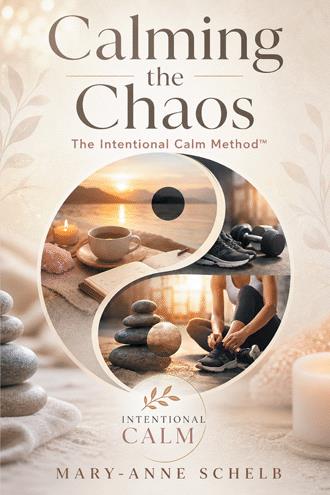
Calm First. Then Move Forward. There are seasons in life when everything feels like too much. Not always in a dramatic, obvious way. Sometimes it happens quietly. You keep going. You keep showing up. You keep taking care of what needs to be done. From the outside, it may even look like you are handling everything well. But inside, you feel it. The racing thoughts. The constant planning. The second-guessing. The exhaustion that does not always come from how much you are doing, but from how much you are carrying. The feeling that you are living in reaction mode instead of feeling grounded in your own life. You may be answering the emails, making the appointments, checking in on the people you love, managing the details, paying attention to everyone else’s needs, and still wondering why you feel so far away from yourself. You may be doing all the “right” things and still feel like something inside you is running too fast. This is what I call the chaos. Chaos is not always loud. Sometimes it looks like overthinking every decision. Sometimes it looks like saying yes when your whole body is asking for rest. Sometimes it looks like lying awake at night replaying conversations, worrying about tomorrow, or trying to solve five problems before your head even hits the pillow. Sometimes chaos looks like being highly capable on the outside and completely depleted on the inside. It can look like smiling through stress. Holding it together. Being the dependable one. Being the strong one. Being the one who figures it out, handles it, organizes it, remembers it, fixes it, carries it, and somehow keeps going. And because you can keep going, people may not realize how heavy it has become. You may not even realize it yourself at first. You just notice that you are more reactive than you want to be. More tired than you used to be. More scattered. More impatient. More disconnected. You may notice that small things feel bigger than they should. Simple decisions feel complicated. Rest feels difficult. Joy feels distant. And your own inner voice feels harder to hear beneath the noise. When you are in that place, it is very hard to think clearly, choose wisely, or move forward with confidence. Not because you are weak. Not because you are failing. Not because you do not know better. But because you are trying to solve your life from a state of stress. And most of us were never taught how to pause long enough to come back to center before we respond. We were taught to push through. To be productive. To be polite. To keep the peace. To do more. To try harder. To figure it out. To carry what needed carrying and be grateful we were strong enough to do it. But strength without restoration eventually becomes survival. And survival is not the same as peace. That is why the first step is not to push harder. The first step is to calm. Calm first. Then move forward. This book was created from that belief. Calming the Chaos introduces The Intentional Calm Method™, a practical and compassionate framework designed to help you move from overwhelm to steadiness, from reaction to intention, and from carrying everything alone to creating rhythms that actually support you. This method is not about pretending life is easy. It is not about ignoring your responsibilities, bypassing your emotions, or forcing yourself into positivity when what you really need is support. It is about learning how to meet life differently. It is about creating enough steadiness within yourself that you can hear what is true. It is about building enough space between the trigger and the reaction that you can choose your next step with more clarity. It is about remembering that you are allowed to pause before you answer, breathe before you decide, and come back to yourself before you move forward. The Intentional Calm Method is built around five pillars: State — calming your body and nervous system so you are not trying to solve your life from survival mode. Story — noticing the thoughts, beliefs, and inner narratives that shape how you see yourself and your circumstances. Strategy — choosing grounded, doable next steps instead of trying to fix everything at once. Systems — creating simple structures, habits, and supports that help calm become sustainable. Spirit — reconnecting with the deeper part of you that knows who you are, what matters, and what is truly aligned. Together, these five pillars create a path back to yourself. Not a rigid formula. Not a demand for perfection. Not one more thing you have to master. A path. One you can return to again and again, especially when life feels full, noisy, complicated, or uncertain. Because the truth is, calm is not something you find only when life gets easier. Calm is something you learn how to access, practice, protect, and return to — even inside a real life with real responsibilities. This is not a book about becoming someone entirely new. It is not about adding more pressure to an already full life. It is not about perfection, productivity hacks, or pretending that life is always easy if you just think positively enough. This book is about returning to yourself. It is about learning how to pause before you spiral. How to steady your body before you make the decision. How to question the story before you believe it. How to take one supportive step instead of collapsing under the weight of the whole staircase. It is about remembering that calm is not passive. Calm is not weakness. Calm is not avoidance. Calm is not giving up. Calm is not letting life pass you by. Calm is the place from which you can hear yourself again. And once you can hear yourself, you can begin to move differently. You can respond instead of react. You can choose instead of collapse. You can soften instead of shut down. You can build a life that supports your nervous system, honors your energy, and helps you move forward with more clarity, balance, and intention. You do not have to solve everything today. You do not have to become perfectly healed, perfectly organized, perfectly grounded, or perfectly calm. You only have to begin. One breath. One pause. One honest moment. One intentional step. That is where calm begins. Not in the absence of chaos, but in the moment you remember you do not have to become the chaos in order to move through it. Because calm is not a luxury. It is a lifeline. And when you learn how to calm the chaos within, you begin to change the way you move through everything around you.
Select Format

Book Details
About the Book
When life feels overwhelming, it is easy to slip into the stress spiral — overthinking, overdoing, second-guessing yourself, and feeling like you cannot quite catch your breath. Calming the Chaos offers a compassionate, practical path back to yourself through The Intentional Calm Method™: State, Story, Strategy, Systems, and Spirit. This simple framework helps you pause long enough to steady your body, notice the story running through your mind, choose one grounded next step, build supportive rhythms, and reconnect with the deeper part of you that still knows the way forward. This is not a book about doing more, pushing harder, or becoming someone entirely new. It is an invitation to come back to center, soften the pressure, and begin again from a calmer, clearer place. Because calm is not a luxury. It is a lifeline. Calm first. Then move forward.
About the Author
Mary-Anne Schelb is the founder of Intentional Calm and creator of The Intentional Calm Method™. As a life coach, holistic health practitioner, Reiki Master/Teacher, craniosacral therapist, speaker, and author, she helps people calm overwhelm, ground themselves out of the stress spiral, and move forward with clarity, balance, and intention.