

The Master's Wisdom
Journey from form to formless
by
Book Cover & Preview Text
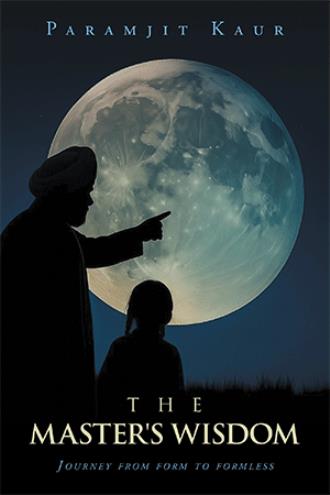
Whispered Into Being My earliest memory of my Master goes back to when I was just four years old. I was born in a small village nestled in the heart of Punjab, in northern India. After their marriage, my parents moved away from our joint family, settling in a nearby city Chandigarh because of my father’s work commitments. Yet, in those early years after my birth, I remained in the village, raised by the warm, extended embrace of my grandparents and our joint family. My parents would visit me on weekends, bringing a glimpse of city life with them—but during the week, I belonged to the land, the people, and the quiet rhythms of village life. I don’t remember everything clearly from that time, but certain memories rise like soft echoes—vague, yet vivid in feeling. I remember sitting on my uncle’s shoulders as we made our way to the fields, the smell of earth heavy in the air. I remember long, sunlit days spent sitting on the ground, eating freshly picked fruits, my small hands buried in the soil as I played with the earth like it was my first teacher. Even then, in those innocent moments of communion with nature, something within me felt held, watched over—as if an unseen presence was already gently guiding me. That presence, I later understood, was my Master. I moved back in with my parents just before my little sister was born. I was nearly four. Her arrival brought a kind of joy I didn’t know how to name back then—gentle, pure, and comforting. Her softness became my strength. As I began adjusting to the new house and the unfamiliar rhythms of city life, I was slowly forming an understanding of who I was—and how I belonged, or didn’t belong, to the people in that house. Though I was told this woman was my mother and the man who returned each evening was my father, it didn’t feel that way in my heart. The labels began forming—mother, father, daughter—but the feeling of love was strangely absent. I always sensed my mother was angry with me. Her presence was strict, uptight, and laced with a bitterness I couldn’t name. She had wanted a son, not two daughters. And perhaps my early years away from her didn’t allow the bonding she may have longed for—or resented. One day, as I was getting ready for school, she became upset with me and snapped, “Why don’t you just die? You’re a burden to me.” I walked to school that morning with those words echoing in my mind, trying to understand what they meant. Could I really die? What would that take? I thought, maybe if I lie still for long enough, I’ll disappear. But then I wondered—What if I get hungry? What if I need to go to the toilet? How long do I have to lie still before I am no longer a burden? In those quiet, confused thoughts, a wave of sadness washed over me. I realised then, in my small child's heart, that the woman I was supposed to call “mother” didn’t want me on this planet. And for the first time, I felt like a burden. Just as that sadness began to settle, I suddenly felt a warm, subtle presence beside me. Then, like a breeze brushing gently against my ear, I heard my Master’s voice whisper: “If you are walking on this planet, there is a purpose behind it.” That moment changed everything. His words didn’t just reassure me—they validated my very existence. That was the first time I personally experienced his presence so clearly. From that moment on, a deep, silent dialogue began between us—a journey of questions, reflections, and the kind of answers that gently unfold over time. My life continued under the shadow of rejection and abandonment. I grew up in a home where I was constantly confused about why I was even there in the first place. The environment was filled with physical and emotional abuse, mostly from my mother. Though my father never laid a hand on me, he carried the weight of absence. When my mother would beat me with a stick, he would quietly walk outside. Once it was over, he would return—as if nothing had happened. He didn’t hurt me, but he never healed me either. Our relationship was emotionally neutral—he ensured my basic needs were met food, clothes, education, and safety from the outside world. But the real danger was never outside. It lived inside the walls of that house. And I use the word house deliberately—because it never felt like home. I was always longing for a home, but not one of bricks and walls. My soul searched for something far beyond… something out in the sky, somewhere I truly belonged. I always had a strong mind, even as a child. A quiet clarity that told me one day, I would free myself from that place. And yet, the trauma bond with my mother was powerful. For most of my life, I tried tirelessly to please her, hoping I could finally earn her love—or at least her approval. It was confusing—probably for both of us. In the early years, my sense of self was almost fused with hers, an enmeshed identity. But as I grew older, something began to shift. My own ego identity—Param—began to emerge. With that growing separation, I could sense the fear and insecurity deepening in her. And perhaps unconsciously, she fought harder to keep me tethered. But it was too late. The wings of my soul had already begun to stretch—and I knew one day, I would fly far beyond the place that once tried to keep me small.
Select Format

Book Details
About the Book
The Master’s Wisdom is a living dialogue between seeker and guide, offering timeless insights into the soul’s journey through many planes of reality. Tracing the soul’s vast voyage – from the primal essence of elements, to the quiet intelligence of plants, the instinctual rhythm of animals, the complex awareness of human life, and beyond - each form is revealed as a sacred classroom in the soul’s unfolding. Through parables, poems, and moments of stillness, the Master invites the reader to look inward—to discover the deeper order beneath life’s chaos, and to awaken the hidden knowing that lives within us all. If you’ve ever felt lost, curious, or called by something beyond the visible, The Master’s Wisdom will meet you there—with open arms and a quiet invitation. For those drawn to the inner path, this book is both compass and companion—a gentle light for the journey into the vast mystery of existence.
About the Author
Param is a nurse, spiritual explorer, and first-time author whose journey bridges the realms of healing, self-discovery, and higher consciousness. Guided by a deep longing to understand life’s greater mysteries, she has walked an inner path of transformation—one that has led her beyond the visible, into the sacred silence of the soul. Trained as a certified regression therapist, Reiki healer, and Pleiadian lightworker, Param’s work is grounded in direct experience and the soul’s timeless yearning for truth. This longing became a path, and that path a calling—to explore the vast inner landscape where wounds become wisdom, and the personal dissolves into the eternal. The Master’s Wisdom is her literary debut—an offering born not from concept, but from lived experience. Blending poetic reflection with timeless insight, her words are less about teaching and more about transmission. They invite the reader not to follow, but to turn inward—to listen, to feel, to remember. Param lives and practices in Australia, where she continues to walk the path of presence, offering healing and guidance to those seeking clarity, peace, and a deeper connection to the self and the cosmos.