

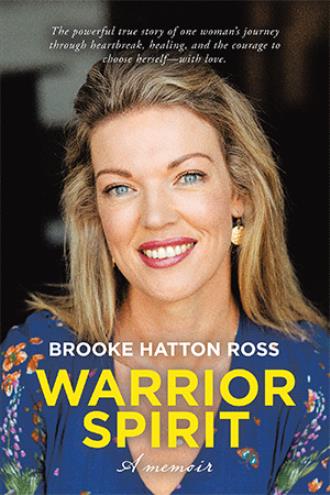
WARRIOR SPIRIT
A Memoir
by
Book Cover & Preview Text
Changed Forever: A Life Altered by the Unseen However, I had no idea that chapter would include the words “Do not move, or you might drop dead.” Just a few weeks after turning twenty-five—four months after returning from London—those words now changed everything. Jason had arrived the month before, in May 2005, and we were settling into our new Australian life together—exploring beaches, enjoying Sydney’s nightlife and daytime venues. I was working in the human resources role I had started three months earlier, and Jason had just landed a fantastic job with one of Australia’s biggest building companies. Life was good. On a cold winter weeknight after work, I went out for a walk, as I often did. The day at the office had been busy, and the crisp night air encouraged me to walk faster. I loved feeling my heart pumping, endorphins coursing through my body. It was an ordinary walk—something I have always enjoyed. Later that night, lying in bed beside Jason, I told him about a sharp pain in my left calf. It felt like a pulled muscle. I put it down to the cold weather and my fast pace—maybe I hadn’t warmed up properly? The next day, the pain continued, worsening. Still thinking it was muscular, I skipped the doctor and booked a physiotherapy appointment instead. Mum drove me there. The physiotherapist diagnosed a torn calf muscle and prescribed a course of treatment. Over the next two weeks, the pain became excruciating. My entire left leg swelled beyond belief. I kept up the physio visits, but things only got worse—until one day I couldn’t stand it anymore and decided to see a doctor. By sheer luck, I got a late appointment that afternoon at my parents’ GP. I caught the train from work to Kogarah, and Mum met me at the station to drive me to the surgery. I could barely walk. The doctor, whom Mum had known for years, took one look at my leg and said, “Brooke, I suspect you have Deep Vein Thrombosis, also known as DVT. You need to get this checked immediately.” He phoned the local ultrasound unit near St George Hospital and told them I needed to be seen as a matter of urgency. I felt scared and confused. How could I have a DVT? I was young, fit, and healthy. I had just turned twenty-five. At the ultrasound clinic, the sonographer began the scan and then excused herself. I sat alone in the sterile room for what felt like an hour, whilst my mum waited at reception, both of us growing concerned. One by one, other medical staff came in to look at me. “And you’re only twenty-five?” they kept asking, incredulous. My stomach sank. Finally, the doctor in charge came in and said the words that would change me forever: “Brooke, do not move or you might drop dead.” I froze. He explained that I had a severe DVT blocking my entire leg from ankle to groin—an extreme and immediate risk to my life. He didn’t want me to walk. They considered calling an ambulance but, fearing delay, told Mum and me to walk carefully to St George Hospital Emergency, just around the corner. They phoned ahead to prepare for my arrival. At the hospital, my whole world shifted. I was rushed through Emergency and given an urgent blood thinner to reduce the immediate threat. Dad and Jason arrived quickly. More tests followed. They discovered not only one massive clot in my leg, that went from my ankle all the way to my groin, but more than thirty smaller clots, Pulmonary Embolism’s, that had already broken off—silently travelling to my heart and lungs. Each one was a potential killer. I had been walking around for two weeks with a ticking time bomb growing inside me. I was admitted immediately. The doctors weren’t sure if they could save my leg—but we had saved my life. I became the most visited patient on the ward. As the youngest patient with such severe DVT and Pulmonary Embolism’s, I was the mystery. The miracle. Each morning, medical students filed in to learn from my case, while I sat in my gown, smiling at everyone and trying to process what had happened. What haunted me was how easily it had been misdiagnosed. Mum was furious and went back to the physiotherapist to tell him. I was grateful she did, although it felt somewhat pointless—no amount of anything could undo what had happened. The damage was done. From that time on, this became an ever-present part of my life. I had to adjust to the physical changes to my body—the pain, the constant throbbing, the compression garments, the daily medication, the weekly blood tests, the regular specialist appointments and hospital check-ups. And there was also the emotional adjustment too—now I was seeing a different body in the mirror each day. A leg that no longer looked like my own and did not match the one next to it. I already had body image issues I’d been working hard for years to overcome, but this added a new grief I could never have imagined. I bargained with The Universe. I pleaded. I would give anything to go back. I promised to love my body exactly as it was if only I could be healed. But it was too late. I was alive, and I was grateful. But I was also changed forever. We had no answers for why it had happened, and I didn’t yet realise the long and exhausting health journey that lay ahead as a result.
Select Format

Book Details
About the Book
Sometimes the most powerful transformation begins when it all falls apart…
Warrior Spirit is the raw and deeply human memoir of one woman’s extraordinary journey through heartbreak, trauma, loss, and ultimately, transformation.
Brooke Hatton Ross shares the intimate details of her life—including motherhood, marriage, grief, and growth—with a voice that is both vulnerable and fierce.
As Brooke navigates life after betrayal and the sacred rebuilding of soul and safety, she offers readers not just her story, but a mirror for their own. With every heartbreak and every breakthrough, Brooke finds her way home to herself—not as the woman she once was, but as the woman she was always meant to become.
Woven through with sacred moments, quiet victories, and spiritual insight, this is a story of profound courage, true self-discovery, and divine transformation.
Warrior Spirit is more than a memoir—it is a love letter to every person reclaiming themselves.
For every soul who has whispered, “I can’t do this”—this book is your answer: yes, you can.
About the Author
Brooke Hatton Ross is a psychotherapist, writer, mother, and soul guide whose work is grounded in lived experience and spiritual truth.
With a background in global corporate human resources and nearly a decade of healing and empowerment work with clients, Brooke supports individuals in transforming trauma into power and pain into purpose.
Based in Australia, she weaves her love of storytelling, motherhood, and sacred service into everything she creates. Warrior Spirit is her first memoir—a luminous offering of truth, courage, and feminine strength.