

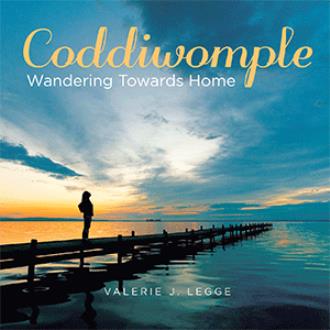
CODDIWOMPLE
Wandering Towards Home
by
Book Cover & Preview Text
After driving ten to twelve hours each day, we were always more than ready to pull over and settle in for the night. On several occasions, we stayed at actual RV campgrounds - unsurprisingly, nearly deserted due to the pandemic. Only once did we follow common advice and park at a truck stop, joining a line of other rigs – all of which kept their engines running noisily through the night to maintain air conditioning. Crossing the Prairie provinces proved both monotonous and mesmerising. The flatness of the plains seemed endless, yet constantly transformed by the changing light - at times under a blinding blue sky that stretched without limits, at others darkened by the approach of menacing, low-hanging rain clouds. Crossing the border into Alberta marked not just a shift in scenery, but a shift in energy - we were now just one province away from our final destination. That night in Canmore, we attempted to park in a Walmart lot filled with teenagers in camper vans, only to witness the overdose of a young man, who was rushed away by paramedics. The following morning, we were relieved to escape the madding crowds and make our way to Lake Louise. There, the vast, empty parking lot allowed us to spread out without issue. It felt almost miraculous to stroll around the turquoise-blue lake without jostling among throngs of tourists, all vying for the perfect photo – a stark contrast to my previous visits. The rest of the drive through the Rockies was equally dramatic, with narrow tunnels carved through the snow-capped mountains of Glacier National Park. Otherworldly names flew past as we wound our way through low-hanging clouds - Tulameen, Spuzzum, Hope – until we finally reached Vancouver. Our first stop was one of my favourite places: the Museum of Anthropology on the edge of the UBC campus. The parking lot, once again empty due to pandemic shutdowns, allowed us to stroll freely and take in the towering totem poles, breathing in the spirit and ambiance of the West Coast Salish peoples. To celebrate our momentous cross-continental arrival, I reached out to an old friend who lived nearby. She kindly invited us for supper with her, assuring us that parking Angélique on the street in her residential neighbourhood would be no problem. Technically true, but it didn’t account for the treetops, nearly level with the roof of the motorhome, or the tricky task of backing up, making a U-turn, and folding into the tight spot. A small crowd of curious onlookers gathered to watch, and when Jorge finally completed the manoeuvre, they broke into a spontaneous round of applause. We had arrived! Early the next morning, we headed to the airport - the only legal way for me to enter the United States was by air. Jorge waited until I had successfully cleared Customs and received a six-month tourist visa stamp in my passport. Only then did he begin the drive to Seattle in the motorhome, with the car still in tow. The plan was to meet there and camp out at his son’s home until his work contracts were completed. Imagine our surprise when, upon crossing the border with his U.S. passport, Jorge was asked where the vehicle’s owner was. He handed the agent the official letter I had prepared, authorizing him to drive the Quebec-plated motorhome and all its contents. The sullen agent replied that Jorge himself would be allowed entry – but the motorhome, and my car, would not. When Jorge explained that I had already entered the U.S. legally by flying in, the situation escalated. Apparently, my initial attempt to cross at the Windsor-Sarnia border had been flagged, and now I was suspected of attempting to sneak into the country – perhaps to unlawfully immigrate and sell off all my possessions for profit. The agent sharply admonished Jorge, saying I was behaving like a spoiled child - the kind who, when told “no” by one parent, runs to the other in hopes of getting a “yes”. If only they had known how preposterous their assumption was! From the very beginning, I had made it crystal clear to Jorge that I would never agree to live in the United States, let alone make it my permanent home. Just as the airplane doors were closing and we were preparing for take-off, Jorge’s text message arrived: he had been forced to turn back at the border, though thankfully he was allowed to re-enter Canada with the motorhome. He urged me to get off the plane and meet him in front of Vancouver airport, where he had dropped me off just hours earlier. There was nothing I could do but to fly to Seattle, deplane as quickly as possible, and sprint through the nearly empty airport in search of a counter where I could buy a return ticket - on the very plane I had just arrived on. The process crawled along; during the pandemic, hardly any staff were working. In the end, I had to cut in front of others when I heard the final boarding call, forcing my way past a closed gate to reclaim my seat – much to the consternation of the startled staff, who clearly recognized me. Jorge was waiting for me outside Vancouver airport, understandably forlorn. We had been so confident in the success of Plan B that we hadn’t even considered a Plan C – yet here we were. The U-Haul car hitch was due to be returned in Seattle that afternoon, so we opted for the next best solution: dropping it off at a depot in Vancouver instead. This meant that, for the first time, we were traveling in two separate vehicles, adding yet another layer of complexity to an already tangled predicament.
Select Format

Book Details
About the Book
Coddiwomple is an old English word meaning “to travel purposefully toward an as-yet unknown destination.” It sparks an image of a meandering journey through an unusually full life—seeking beauty, meaning, adventure, and a sense of belonging along the way. Part biography and part travelogue, Coddiwomple follows a life richly lived across continents and decades, shaped by music, family, friendship, and discovery. Along the way are stories of courage, humour, and lessons learned through change, challenge, and reinvention. Warm, wise, and deeply human, this is a story for anyone who has ever wondered where the road might lead—and found joy in the journey itself.
About the Author
Valerie Legge has worn many hats throughout her life —concert violinist and teacher, mother, juice bar owner, and professional, personal, and executive coach. An avid traveler, spiritual seeker, and lifelong learner, she is passionate about reinvention and what she calls “composing a life”: blending creativity, purpose, and curiosity at every age and stage. Coddiwomple is her first memoir, celebrating the joy of exploration, human potential and transformation, and the art of embracing the unknown.