

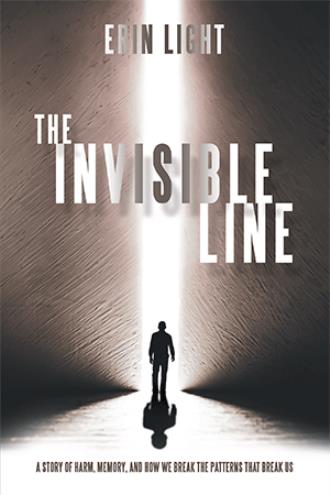
The Invisible Line
A story of harm, memory, and how we break the patterns that break us
by
Book Cover & Preview Text
I used to think the line was outside of me. A boundary drawn by other people, other systems, other hands. Something I had to find, or earn, or be granted permission to cross. I didn’t understand that the line was mine—that it had always been mine—and that the only reason it felt invisible was because I had been taught not to look at it. The first time I felt it, I was too young to name it. It was a flicker, a tightening in my chest, a sense that something was wrong even though everyone around me insisted everything was fine. Children learn quickly what is allowed to be spoken and what must be swallowed. I learned to swallow. I learned to smile. I learned to make myself small enough to fit inside other people’s comfort. But the body remembers what the mind is forced to forget. It remembers the moments when trust fractures, when safety becomes conditional, when love turns into something you have to earn by disappearing. It remembers the nights you lie awake rehearsing the version of yourself that will keep the peace. It remembers the way your voice sounds when you stop using it. For years, I mistook that remembering for weakness. I thought the ache meant I was failing to move on, failing to be grateful, failing to “let go.” I didn’t understand that memory is not the enemy. Memory is the map. It shows you where you lost yourself. It shows you the places you were never meant to stay. The line appeared again in adulthood, but this time it was sharper. I felt it in the quiet moments—standing in a kitchen that wasn’t mine, apologizing for things I didn’t do, shrinking to fit someone else’s version of who I should be. I felt it in the way I said “I’m fine” even when my body was screaming otherwise. I felt it in the way I kept choosing people who needed me silent. There is a particular kind of harm that doesn’t leave bruises. It leaves patterns. It leaves the belief that your needs are too much, your boundaries are too sharp, your truth is too heavy. It leaves you convinced that belonging is something you buy with self‑abandonment. I lived inside that belief for years. The turning point wasn’t dramatic. It wasn’t a single moment of clarity or a cinematic collapse. It was something quieter: a morning when I woke up and realized I couldn’t keep crossing the same line without losing something essential. I didn’t know what would happen if I stopped. I only knew what would happen if I didn’t. The line wasn’t outside of me. It was the place where I ended and the world began. It was the truth I had been circling for decades: that I could not heal in the same rooms that taught me to disappear. Leaving those rooms—literal and metaphorical—was not graceful. It was messy, disorienting, and full of doubt. People don’t applaud when you stop abandoning yourself. They question you. They accuse you of being dramatic, ungrateful, difficult. They ask why you can’t just let things go. They ask why you’re making everything so hard. But the hardest thing I ever did was stay. The second hardest was leave. I didn’t know then that leaving would require me to rebuild my entire understanding of belonging. I didn’t know that the memories I had buried would surface one by one, demanding to be seen. I didn’t know that healing would feel like breaking open, or that truth would feel like both a wound and a doorway. What I did know—what I finally allowed myself to know—was that the line was real. And once you see it, you cannot unsee it. There is a moment in every survivor’s life when the story shifts. When the question is no longer “Why did this happen to me?” but “What do I do with the truth now that I can finally see it?” For me, the answer came slowly. It came in the form of small choices: telling the truth out loud, even when my voice shook; choosing people who didn’t require my silence; listening to the parts of myself I had ignored for years. It came in the form of remembering. Memory is not a punishment. It is a reclamation. It is the body saying, “Here is what happened. Here is what you survived. Here is what you deserve to know.” The more I remembered, the more the line sharpened. I could see the moments I crossed it without realizing. I could see the ways I had been conditioned to override my own instincts. I could see the patterns that shaped my relationships, my choices, my sense of self. And I could see, with startling clarity, the moment I stopped crossing it. It didn’t feel brave at the time. It felt like collapse. It felt like failure. It felt like the end of something I had spent my entire life trying to hold together. But endings are not always losses. Sometimes they are the first honest thing you do. The Invisible Line is the story of how I found my way back to myself—not in a single moment, but in a thousand small ones. It is the story of harm, yes, but also of the quiet, persistent ways the body tries to lead us home. It is the story of learning to trust what I feel, what I know, and who I am when I am no longer performing for safety. It is the story of refusing to disappear. And it is the story of what happens when you finally choose to stay on your own side of the line.
Select Format

Book Details
About the Book
The Invisible Line is a Memoir about the quiet ,unseen ways people learn to abandon themselves‐ and the moment they finally refuse. Through clear, unflinching storytelling, Erin traces how harm, memory, and survival shape identity long before we have language for it. Moving between past and present she reveals the patterns that kept her silent, small, and grateful for what hurt. As forgotten memories surface, she begins the slow return to self-trust, agency, and belonging. The Invisible Line offers readers away to recognize the patterns that break them- and the courage to break free
About the Author
Erin Light is a writer and advocate whose work explores harm , memory and the Invisible patterns that shape our lives. Drawing from lived experience with trauma- informed insight, she writes with clarity, compassion, and am unflinching commitment to truth. Her work helps readers understand the patterns that break them- and how to break free. THE INVISIBLE LINE is her debut book.