

Healing Reflections
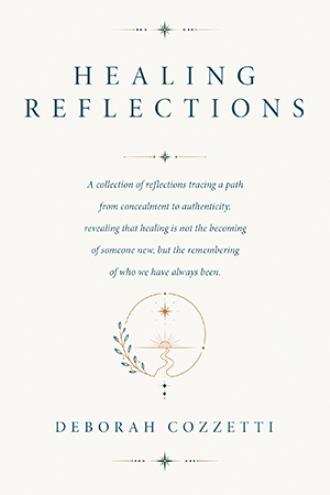
A collection of reflections tracing a path from concealment to authenticity, revealing that healing is not the becoming of someone new, but the remembering of who we have always been.
by
Book Cover & Preview Text
INTRODUCTION What Evidence Are You Using to Confirm Who You Are? Much of human life is lived through unconscious agreement. Through the conditioning of the past, we move through our days gathering evidence for who we believe ourselves to be. Not who we truly are, but who pain taught us we were. Who betrayal suggested we were. Who abandonment, violation, sorrow, and misunderstanding impressed upon the tender places of our being. And because these impressions were formed early and often formed deeply, they begin to live beneath the surface of conscious thought. They become quiet inner agreements. Inner reference points. Hidden conclusions. Then, without realizing it, we begin interpreting life through them. We look at our relationships, our disappointments, our conflicts, our longings, and our repeated wounds, and we use them as confirmation. Confirmation of what we have already come to believe, somewhere within, must be true. That we are unseen. That we are unworthy. That we are outside love. That life does not open for us the way it does for others. That we are destined to be misunderstood. That suffering is somehow woven into our identity. And so the old self-image continues to be fed. Not because it is true, but because it is familiar. The wounded self is always searching for proof of its own existence. And if we do not become conscious, we will keep returning to those old internal altars — the places where false identity was first formed — and we will keep laying our lives upon them. We will keep re-entering the same emotional patterns. The same relational dynamics. The same hidden conclusions. The same distortions of self. And we wonder why life keeps echoing back what we most long to be free from. But the echo is not always truth. Sometimes it is agreement. There comes a moment on the sacred path when we must ask: What evidence have I been using to confirm who I am? Have I been using pain as proof? Have I been using rejection as identity? Have I been using betrayal as revelation? Have I been using the history of my wounding to define the essence of my being? Because if so, then much of what I have called “myself” has not been my essence at all. It has been survival. It has been the adapted self. It has been the personality built around injury. It has been the soul trying to move through the earth while carrying conclusions it was never meant to keep. This is where the holy work begins. Not in condemnation. Not in striving. But in remembrance. To return to truth, we must be willing to see that much of what we once used as evidence was gathered through a fractured lens. We were reading ourselves through pain. We were interpreting life through the memory of separation. We were calling wounded perception “truth.” But spirit does not confirm the false self. Spirit calls us back from it. We are invited to loosen our grip on the old identity and release the inner agreements that were formed in seasons of sorrow, fear, and distortion. Then something new begins. We start speaking differently within ourselves. We start expecting differently. We start recognizing the places where grace has always been present. We start noticing what is life-giving, what is true, what is aligned, and what reflects the deeper nature that has always lived beneath the wound. We begin gathering new evidence. Evidence of worth. Evidence of divine belonging. Evidence that we are not forsaken. Evidence that light still lives within us. Evidence that the soul remembers what the wounded mind forgot. Evidence that we are not here to endlessly recycle pain, but to be reconciled back into wholeness. At first, this can feel unfamiliar. Like wearing a garment the soul recognizes, but the personality does not yet know how to carry. The old identity may feel more familiar simply because it has been rehearsed longer. But familiarity is not the same thing as truth. Truth often feels new when we have lived a long time in distortion. And so we practice. We renew the mind. We soften the body. We release the ancient agreements. We let spirit reveal what was always underneath the injury. Not the self built from history, but the self held in God. Not the image formed through trauma, but the essence that existed before the wound was named. This is the return. This is reconciliation. This is the sacred undoing of false identity. You are not the sum of what hurt you. You are not the evidence gathered through your most broken seasons. You are not the conclusion that pain wrote upon your inner world. You are older than that wound. Holier than that wound. More original than that wound. Be restored to the innocence beneath the injury. Be reconciled to the truth that was never lost, only covered. Be willing to let a deeper Light tell you who you are. What follows is not a book of quick answers, but a path of remembrance. Each chapter is a threshold, each reflection an invitation to come closer to the truth beneath conditioning, pain, fear, and history. Read slowly. Pause often. Let what stirs in you have space to breathe. This journey is not about becoming someone else. It is about returning to the one you have always been beneath the wound, beneath the role, beneath the noise. If something in these pages feels familiar to your soul, trust it. You are not being asked to strive here. You are being invited to remember.
Select Format

Book Details
About the Book
What if healing is not about fixing what is broken, but remembering what has always been true? In Healing Reflections, Deborah Cozzetti explores the path from concealment to authenticity through a collection of spiritual and personal reflections shaped by decades of ministry, lived experience, and inner discovery. With honesty, compassion, and insight, she examines the beliefs, patterns, relationships, and fears that often keep us disconnected from our deepest selves. Through reflections on trust, surrender, identity, self-worth, personal transformation, and the power of conscious choice, readers are invited to look beyond conditioning and reconnect with the wisdom already living within them. At its heart, Healing Reflections is an invitation to reclaim your voice, remember your worth, and discover that healing is not the becoming of someone new—it is the remembering of who you have always been.
About the Author
Deborah Cozzetti is a writer, teacher, and lifelong spiritual seeker whose work explores healing, authenticity, and personal transformation. Drawing from decades of ministry, intuitive insight, and lived experience, she invites readers to reconnect with their inner wisdom, reclaim their voice, and remember who they have always been. Reclaim Your Voice www.facebook.com/deborah.cozzetti.9 yourmetajourney@gmail.com