

Samadhi in the Kitchen
by
Book Cover & Preview Text
A slivered disc of ruby red beet, roasted and marinated in yuzu and sesame oil, and a few purposefully haphazard splashes of it’s fuchsia marinade adorn an oblong white plate much larger than the ingredients placed upon it, giving space and room for appreciation and contemplation. A billowing cloud of avocado mousse sits delicately atop it’s beet island. Nestled into it, a morsel of crispy skinned red snapper with it’s pink skin shimmering like the reflection of the sun flickering across the tips of waves, it’s soft white belly nestled safely into the cloud beneath it. A few centimeters away a perfectly square cube of black sesame speckled sushi rice fried crisp and golden on two sides, a soft orange tuft of sea urchin (uni) atop, sprouting vibrant green pea shoots like a flower bursting forth from the ground skywards. This dish is called the marriage of sea and sky. My life has offered to me juxtapositions of sweetness and bitterness, brightness and blandness in such distinct ways as to heighten each contrasting experience. Relationships, friendships, marriage, family dynamics, societal expectations bumping into each other, marinating and macerating with one another. Paying attention to words, actions and interactions, as if understanding just how much salt, sweet, fat, acid or heat is needed to balance and enrich this corporeal experience of life we are living is how the journey towards contentment, begins. Samadhi is described by Buddhists as a one pointedness an all pervasive being in something, a singular focus. To get there Buddhists follow what they call “the middle way” eight specific “right” or harmonious ways of being in the world. I see these steps through the steps of cooking a meal. Choosing specific ingredients mindfully and with love that enrich, compliment and strengthen each other together or not. Acknowledging the strengths and weaknesses of each scent, taste, texture and using discernment to choose quantities, cooking times, and the balancing flavors. Then waiting, allowing the passing of time without reactivity, keeping a centered stillness and paying attention to my breath. It is in this way that my life continues to be informed by my cooking, and my cooking informs me of where my discipline in life is still lacking along this “middle way” towards ultimate samadhi. If not for this daily practice life would be mindlessly acting for self-preservation without thought to the consequences. We are attached to things happening in certain fixed ways, and don’t realize that perception and action around what is happening can be changed. We assume our very same perspective and habits of behavior interacting with the events in our lives are only able to be done in the same way we always have, though we can never change something with the same energy with which it was originally created. I spent most of my early years not even recognizing how unaware, how on autopilot I was, conditioned by familial, cultural and religious beliefs; they were my framework for behavior that I never even questioned until I was aware that I could. We must challenge our own beliefs, question and ask if the how, what and why of what we do and say and think is in keeping with what we really think, not what has been imposed upon us. If our thoughts and actions are moving us in the direction of more contentment or more dis ease. Waking ourselves from this slumber of mindlessness and really being present: this is how we flip the script. I may not change events that occur in my life, but I do choose how to respond not react, how to sit in stillness and witness as if outside of myself to come upon the perspective which allows me to view the flow of life so that it enriches me, informs me, and can be interpreted with compassion. This is my story, just one version, one perspective, told in the same way that I experience the marrying of components of a meal.
Select Format

Book Details
About the Book
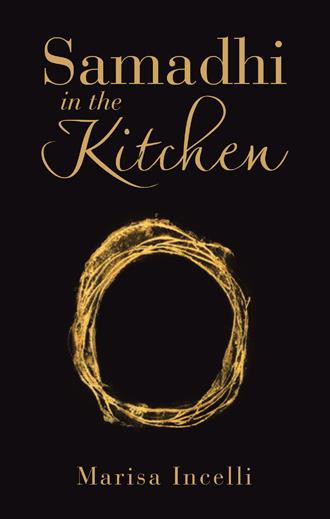
Marisa Incelli’s Samadhi in the Kitchen, explores the profound intersection between mindful cooking, personal growth, and the pursuit of inner peace. Through the metaphor of preparing a meal, the author reflects on the “middle way” of Buddhist practice, where presence and intentionality mirror the delicate balance of flavors, scents, and textures. By viewing life’s challenges as ingredients to be harmonized rather than obstacles to be feared, the narrative emphasizes the transition from reactive living to a state of conscious witnessing. As the author matures, she has the realization that cooking has always acted as a grounding anchor for her sensitive, restless spirit. By applying the principles of wabi-sabi, she learns to embrace the beauty of imperfection. Her life’s events while challenging shift from the cause of suffering to embracing with gratitude and grace.
About the Author
Marisa Incelli is a multidisciplinary practitioner dedicated to guiding individuals toward their innate vitality and brilliance through integrative healing arts. Her work weaves together Thai bodywork, yogic movement, breathwork pracitces, art therapy, and holistic and ayurvedic nutrition to create deeply restorative and transformative experiences. Her journey began in classical ballet and evolved through yoga and Thai bodywork after scoliosis and kyphosis in her thoracic spine led her to seek alternative forms of movement and therapy. Over more than sixteen years of practice, Marisa has cultivated a fusion-based approach that honors the wisdom of multiple systems while emphasizing Traditional Thai Medicine and therapeutic touch.