

The Soul’s Journey Through the Tarot
22 Archetypes for Living, Loving and Becoming
by
Book Cover & Preview Text
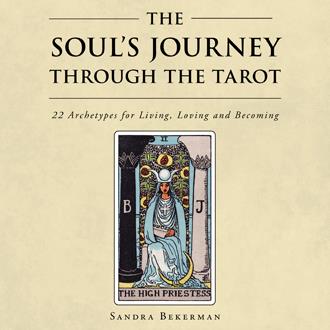
The first Tarot card I was ever shown was Death. That was not exactly the welcome I was hoping for. Courtney, a friend and intuitive reader, held the card up for me to see. A skeletal, stoic figure in black armor rode a white horse. Beneath its hooves lay a fallen king. Nearby, a grieving woman knelt in despair while another figure bowed in surrender. In the distance, however, the sun hovered on the horizon between two towers. I barely noticed that part. Of all the cards in the deck, why had this one found its way into my reading? Death looked ominous, brutal, and uncaring. It is one of the things we fear most in our lives. We spend much of our time trying to avoid it, delay it, or pretend it isn't coming. Seeing it staring back at me from a Tarot card felt unsettling, almost confrontational. Then Courtney smiled. "You need not be afraid of endings," she said, and I immediately understood that Death was being used as a symbol, not of the final end of our embodied experience, but of the countless endings we experience throughout a lifetime. "Death is woven into everything that is created," Courtney continued. "Every season ends. Every chapter closes. Every version of ourselves eventually gives way to the next. It is only after an ending that something new can begin." Something in me unclenched, and tears of deep knowing filled my eyes. Her reading was right. There was much in my life that needed to end in order to create space for what was trying to emerge: relationships, identities, assumptions, ambitions. Some were gently released; others were taken from me. Yet every ending made room for a beginning that was more aligned with who I was becoming. The Death card taught me this: endings are not the opposite of life. They are one of life's most essential ingredients. That was my introduction to Tarot about a decade ago. And surprisingly, despite the Death card, it was love at first sight. Although I encountered Tarot in the twenty-first century, the cards themselves have been around since the fifteenth. How has something so ancient stayed relevant for more than five hundred years? Perhaps Tarot has endured because it provides a mirror to life itself. It is about cycles of growth and transformation. Creation and destruction. Renewal and loss. Through archetypes, symbols, images, and stories, Tarot reflects the universal experiences every human being encounters in the evolution of the soul: we are called to begin. We lose our way. We cling. We surrender. We fall apart. We grow. We love. We lose. We grieve. We begin again. The cards called me in. Over time I became a Tarot reader, though never a professional one; I read mostly for friends and family, and before every reading I offer the same reminder: "Tarot does not predict the future. No one can. You have free will. Tarot simply illuminates the energies, patterns, and possibilities present in a situation. It offers insight into what may support your growth and what may stand in the way." Over the years, I became increasingly fascinated by the Major Arcana: the twenty-two cards that tell the story of a soul's journey through life. Their symbols are ancient, yet their lessons remain startlingly relevant. Each card captures a stage of human development: a challenge, a transformation, or a deeper truth about what it means to be alive. This book began as part of the 100-Day Project, a global creative challenge in which participants commit to a specific creative practice for one hundred consecutive days. My friend Nancy invited me to join, and I chose to spend those hundred days immersed in the Major Arcana. At the time, I wasn't planning to write a book. I simply wanted to deepen my understanding of the cards, to become a better Tarot reader and, perhaps more importantly, to better understand my own becoming. Each day, I sat with a different archetype, researching its symbolism, reflecting on its lessons, and exploring how it appeared not only in the cards but in everyday life. As the days unfolded, I began to see the Major Arcana as more than a collection of Tarot images. Together, they formed a map of the soul's evolution: a symbolic journey through innocence and experience, love and loss, surrender and transformation, death and rebirth. Most Tarot decks come with a small guidebook that offers keywords and interpretations for each card. Valuable as those have been, I found myself longing for something deeper. Rather than explaining how to read the cards, I wanted to explore what they reveal about being human and about the soul's journey through life. What emerged is this book: a series of reflections on the Major Arcana as stages of spiritual evolution. An invitation to encounter these ancient archetypes as mirrors through which we can better understand ourselves, our relationships, and the unfolding path of the soul. My hope is that, somewhere in these pages, you recognize yourself, and perhaps discover the next step on your own soul's journey.
Select Format

Book Details
About the Book
The first Tarot card Sandra Bekerman was ever shown was Death. It turned out to be not a warning, but an invitation. In The Soul's Journey Through the Tarot: 22 Archetypes for Living, Loving and Becoming, entrepreneur and author Sandra Bekerman walks you through the twenty-two cards of the Major Arcana as a map of the human soul moving through life. From The Fool's first courageous step into the unknown to The World's experience of wholeness and arrival, each card marks a stage we all pass through: beginning, breaking, surrendering, grieving, and beginning again. Travel through every archetype in turn: The Lovers and the gifts of intimacy, The Tower and the grace hidden in collapse, The Star and the hope that returns after the storm. Each chapter offers a meditation on the card's meaning, a message in the voice of the archetype, questions for reflection, and a curated shelf of books to carry you deeper. In the soul's journey, we are called to begin, we lose our way, we fall apart, we grow, we love, we grieve, and we begin again. Along the way, you'll learn to read not only the cards, but the quiet voice of your own intuition. Somewhere in these pages, you will recognize your own path, and perhaps discover the next step on your soul's journey.
About the Author
Sandra Bekerman is an author, entrepreneur, and lifelong student of the inner life and of relationships. For more than two decades she has explored meditation, mindfulness, psychology, and spirituality, along with the ways we love, connect, and grow alongside one another, weaving what she has learned into both the companies she has built and the books she has written. She is the author of Inner Power: A Guide to Find and Activate the Wisest Part of You. The Soul's Journey Through the Tarot grew out of a hundred-day immersion in the Major Arcana, undertaken not to predict the future but to better understand the soul's passage through life. Sandra reads Tarot for friends and family, always with the same reminder: the cards do not foretell what will come; they illuminate the energies, patterns, and possibilities already present, and reflect back the truths we are ready to remember. Sandra also guides inner journeys in community, holding space for others to travel inward, do the deeper work, and return more aligned to their inner selves. She lives in California and New York.