

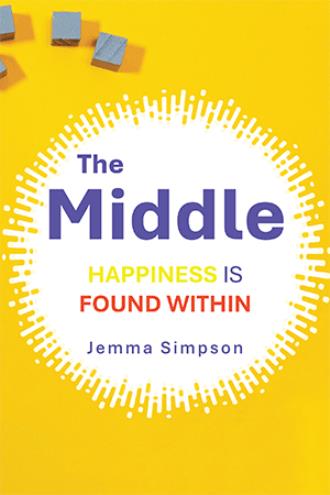
The Middle
Happiness is Found Within
by
Book Cover & Preview Text
If you are looking for something, you need some basic information first. You need to know what it looks like; you need to know where you might be able to find it, and you need to be able to recognise what it is that you are looking for. Have you ever lost and looked for something? Did you start by thinking where did I last have it? We often search for things in familiar places where we remember having them. The same pattern applies to happiness; we tend to seek it in moments or locations where we recall feeling joyful: holidays, parties, celebrations, special events. But was the happiness truly in the holiday itself? Was it woven into the celebration, or did it somehow exist at the party venue? How did it get there? Just as an object may not always be where we expect, happiness might not be in the places we assume it to be, it could be waiting to be discovered somewhere entirely new. Expanding our search beyond the obvious may lead us to unexpected sources of joy. By opening your awareness and understanding of what you are looking for, you are increasing your likelihood of finding it. Expanding your awareness and clarity boosts your chances of finding what you seek. Imagine I say to you, “I’ve lost my dog Maggie — please can you help me find her?” Straight away, you’d need some details: What does Maggie look like? Where was she last seen? Is she friendly? Will she come when called? Without this information, you might find plenty of dogs, but how would you know which one is Maggie? Just as you need specific information to identify Maggie among other dogs, you need to define what happiness looks like for you to recognise it when you encounter it. Similarly, when seeking happiness, it’s important to consider what it means to you and how you’ll know when you’ve found it. If you set out to look for happiness without a sense of what you’re searching for, you might come across many experiences but not be sure if any of them match what you desire. Recognising happiness, just like finding Maggie, requires you to notice certain qualities: Is it genuine, or just a fleeting imitation? Do you want to find it, or is there something holding you back? To build on this, think about searching for a favourite book at home. If you’re not clear about its title, cover colour, or where you last read it, you might pass it by without realising. But if you remember specific details, perhaps a torn corner or a bright blue spine, it becomes much easier to spot, even among a shelf full of other books. In the same way, being clear about what happiness looks and feels like for you helps you recognise it when it’s right in front of you. Whether you’re looking for a lost pet, a beloved book, or something as personal as happiness, defining what you’re searching for is the first step. Clarifying these details not only makes the search easier but also increases the chance that you’ll recognise and truly appreciate what you find. Happiness: What does it look like? What will it feel like? What will it bring to your life? How will you be different with it? How will you behave with it? How will people around you respond to it? Do you already have it? Have you ever had it? How did it feel before? Do you believe in happiness? Do you believe you can truly find it? Sometimes, it's rather like searching for a lost item around the house. Just the other day, my son was convinced he'd already looked in a cupboard for his missing charger. He insisted, "I've checked in there," but when I went back for a quick 'mum look', I found the charger exactly where he'd said he’d looked. It turned out his mind wasn’t fully on the search; he had already decided he wouldn't find it in there, so he didn’t really see what was in front of him. This experience reminds me that our mindset shapes what we notice, not just with lost objects, but with happiness itself. If we don’t genuinely believe happiness is possible or worth seeking, we might miss it even when it’s right in front of us. Just as my son’s half-hearted search kept him from finding his charger, our own lack of faith or presence can rob us of moments of joy. Staying present and open-minded, whether we're looking for a charger or seeking happiness, makes all the difference. I’ve found that when I pause, trust, and focus on the journey, not just the result, I’m far more likely to spot what I’m searching for, in life and at home. Expectation can significantly reduce happiness. When people anticipate specific outcomes and these expectations are not fulfilled, a pronounced disparity arises between imagined scenarios and actual experiences, often resulting in disappointment, frustration, or resentment, especially in circumstances where enjoyment was anticipated. Consider the following example: When envisioning the “happiest place on earth”, be it Lapland, Disneyland, or an idyllic paradise, you might picture ideal weather, joyful experiences, and overall satisfaction. This anticipation shapes both emotional and physical responses prior to the event. However, reality may differ. For instance, Disneyland can present unpredictable weather, crowded environments, overwhelming sensory input, lengthy queues, and high costs. There is also the possibility of missing out on certain desired experiences, such as meeting a favourite character. Despite being portrayed as a joyful destination, the reality may not align with prior expectations, which can provoke strong emotional reactions. These emotions stem not from the environment itself but from the discrepancy between expectation and reality. Focusing on unfulfilled expectations detracts from appreciating the actual experience. Approaching destinations like Disneyland, Lapland, or other paradises without preconceived notions and instead embracing the present moment can help bridge the gap between what is anticipated and what is experienced, thereby enhancing overall satisfaction.
Select Format

Book Details
About the Book
The Middle is a self-help discovery of happiness, wellbeing and emotional literacy. Being a teenager is hard, happiness can often feel out of reach. The Middle uses a blend of gentle Cognitive Behavioural Therapy techniques, Mindfulness practice along with many other self-help tools including Emotional Freedom Tapping, to assist in truly understanding the attributes of happiness and connection. The Middle is not only a wellbeing guide, but an emotional wellbeing first aid kit for young people. The weave of brain, body, mind and thoughts awareness, facilitates and empowers the reader to reach their full potential in all areas of wellbeing. The Middle encourages a sound moral compass on which to build character, empathy and healthy relationships with others. The Middle is the safe spot, the target, the even level, that brings equilibrium to the mind and body, reducing stress and making room for joy, fun, and happiness.
About the Author
Jemma is an experienced NHS registered general nurse, health Visitor, and school nurse. She holds an honours degree in public health, qualifying her as a Specialist Community Public Health Nurse focused on supporting children and families. With over two decades of service in the NHS, Jemma has also become an advanced practitioner in Emotional Freedom Techniques (EFT), offering private sessions to people of all ages for emotional regulation and various health or personal concerns. Her diploma in Cognitive Behavioural Therapy (CBT) allows her to incorporate practical self-help strategies into her work with clients and families.