

The Will to Peace and Truth
Liberty, The Council of the Wise Elders, and Hope
by
Book Cover & Preview Text
Chapter 1 Is there one underlining primal instinct behind every human action? “As a person acts so he becomes in life. Those who do good, become good. Those who do harm, become bad. Good deeds makes one pure, bad deeds makes one impure. You are what your deep driving desire is, as your desire is, so is your Will, as your Will is, so is your deed, as your deed is, so is your destiny.” The Upanishads translated by Eknath Easwaran. Understanding human behaviour is something everyone practices to some degree. It is a survival mechanism to alert us of danger, who to trust and who not too. We need to know if someone is angry towards us and wishes us harm, or is loving towards us to form relationships, or lustful towards us to further the human race. The question here is this though, can we break down every human motivation, every action, every desire into one element, one principle of a human being? Many people have tried. The ancient Greeks had a word for it, Eros. It is tricky to get a clear definition of eros. If you look up the definition online you will see this; - Greek god of erotic love — compare cupid. 1. - The sum of life-preserving instincts that are manifested as impulses to gratify basic needs, as sublimated impulses, and as impulses to protect and preserve the body and mind — compare death instinct. If you look up Eros concept, you will get; Eros, (from Ancient Greek ἔρως (érōs) 'love, desire') is a concept in ancient Greek philosophy referring to sensual or passionate love, from which the term erotic is derived. Eros has also been used in philosophy and psychology in a much wider sense, almost as an equivalent to "life energy". If you were like me before I picked up Laurence D. Cooper’s book, ‘Eros in Plato, Rousseau, and Nietzsche. The politics of infinity,’ then the word and the concept of eros is knew to you. Before I read that book, I had only heard of Nietzsche’s Will to power in regards to eros. Power is a great driving force, there is no question about that, but is it the underlining force that drives all others? Other philosophers didn’t think so. Here are just a few theories of eros from Cooper’s book and a couple others that held meaning for me that I wish to share my thoughts on before I give my conclusion of eros. 1. – Nietzsche’s Will to power 2. – Plato’s Will to the good 3. – Rousseau’s Will to extend life 4. – Viktor Frankl’s Will to meaning or purpose 5. – Freud’s Will to pleasure or create life 6. – M. Scott Peck’s Will to grow Nietzsche is best known for his stance on the Will to power, but he is also known for his Will to Truth. I thought it interesting that he expressed the desires of the Will in two desires that in my option can never be satisfied. Power’s purpose is really simple, it is a tool to satisfy all other desires, from basic desires like having access to food, water and shelter, and much less basic desires like money, sex and servants. But if someone has the desire for power for power’s sake, then they are doomed to have an unfulfilled life. The desire for power for power’s sake is a desire that is total destructive with no end. The desire for power is inwardly selfish, cruel, controlling, hatful and bloody. Power and truth if you think about it are opposing forces. Just as one old saying is, “knowledge is power,” another saying is, “the truth will set you free.” Just as power is corrupting, truth is liberating. Just as power is destructive, truth is innovative. Just as power is controlling, truth is freeing. The Will to Truth, is less simple to understand then power. If I suffer from any desire, it is the Will to Truth. As I try to understand the Will to Truth, I am trying to understand myself. I reason this is why I can never have faith in a God. I need to know. If God exists then God is knowable, the truth of God’s existence is out there somewhere, one way or the other, and knowing that fact dissolves any faith I could ever have. I don’t know for sure where my desire for truth comes from, but if I had to guess it started from my insecurity of appearing to be looked upon as a fool. As a kid I was very trusting, which means very gullible. Now I have done a 180 and I don’t trust anything completely, but it has also made me more open to exploring all parts and avenues of our reality in the hopes of discovering the truth. My desire for truth as expanded over the years to more than that of an insecure ego. Perhaps the Will to Truth is linked to the desire of the universe. Just as the universe is forever expanding, so is truth expansive. Perhaps truth is the light, the eliminating desire of the universe that is manifested through us, and power is the dark force desire that keeps us grounded and unable to fly. A few other questions to consider on the subject of the Will to Truth is why crave truth if a lie is more satisfying? Why have the pain of truth when ignorance can be bliss? Why live with suffering in the real world if you could live in ecstasy in a dream world? To live in the matrix or not? To take the blue pill of the machines fantasy world or the red pill of blood and life? For me at least, I couldn’t live a lie. It would make my entire world meaningless. What is the point of living if you’re not growing, improving and working towards something? Living under a lie, living in ignorance is living in the matrix, it is living in the garden of Eden, it is living in Plato’s cave. It isn’t real. It may be fun, pleasurable and safe, but there is no space for growth, to be more than you are now. It is the life of a slave.
Select Format


Book Details
About the Book
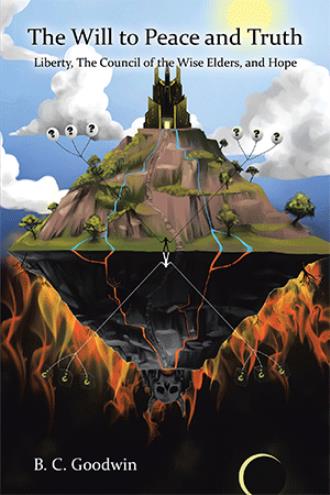
The Will to Peace and Truth is fundamentally a human condition. It is our design for living life, the design for human survival, growth and transcendence. The Will to Peace and Truth is a philosophy of life that will pierce through the lies and vices that lead to betrayal, pierce through the corruption of politics, religion and our own biases that lead to mistrust, fighting, war and hatred of what is different. It will ultimately open us up to the virtues of what makes life worth living. It is one philosophy to unite them all. This book investigates the ethical challenges of societies and asks what is right and wrong, good and evil, and can we create a utopia or are we destined for a dystopia? If humanity grasps the Will to Peace and Truth, I reason it will act as the backbone to humanities transcendence. We will move beyond forced or self-inflicted slavery into liberty for all. We will move beyond a world of despair into one of hope. We will create leaders with the courage and wisdom in order to actually lead well. The Will to Peace and Truth if embraced will be a move away from hatred and violence, and towards love and unity. May truth conquer, peace reign, and humanity become that immortal shining light that illuminates the dark of the universe.
About the Author
I am a son, and a brother. I am a man, partnered with a woman. I am a father, with four children. I am Australian. I am a builder, and I am a philosopher. I like to say I am an intellectual handyman. This makes me curious about many topics and willing to learn new skills, willing to have my thoughts tested, and willing to adapt when I make a mistake. People may be thinking why read a book from, “A jack of all trades is a master of none,” but if you know the second half of that William Shakespeare quote, “but oftentimes better than a master of one,” you may not be so quick to judge. In saying that, I read more than I write, I learn more than I teach, and love more than I hate. I consciously direct my Will towards growth, which is the underlining aspect of humanities Will to Peace and Truth. My soul is laid bare in the pages of my book.