

Smile - A Pocket Guide to Connecting to Our Children and Ourselves
by
Book Cover & Preview Text
Looking back, I realised that every time I had been seriously ill, it wasn’t an external factor causing it, this was what was happening in my life at the time. The more I dwelled on negativity, the sicker I became. I had been hospitalised twice for bowel problems. It was horrific, I was being poisoned inside. The symptoms were treated for a kidney infection, I was given codeine this hardens the waste. Treatable of course, but it could have been prevented. My job was making me ill, my need to carry on not give up and slay the dragon and be right was the reason It happened. Second time, problems were happening, work again and home. This time it was much worse I fainted and had to have a procedure. I keep that band to remind me that. I did that to myself, call it self harm which it is I stopped taking my medication. The reason because I felt that I wasn’t worth anything. It’s a common thing that everytime we take time out from who we are and our brains decide to slam on the breaks. You are given 2 questionnaires, one anxiety one depression. When I first started doing these it seemed weird how when I wasn’t myself, I was expected to admit I wasn’t coping. I especially thought about the misconception of depression and anxiety as being you are weak or after attention and how as I write this. My generation especially men would never admit there were problems. They grew up with fathers that would say and it turns my stomach “ just man up stop being a princess” Luckily we have moved on not without casualties. Andy’s man club and it’s ok not to be ok. If I can help men and women push the reset button and have it tattooed on their heart that … “ I am not my parents, I have the choice and chance to change” So, how do we help our children navigate their emotions? ⸻ Supporting Our Children Through Emotional Struggles My youngest daughter experienced a year-long struggle that began in September. She had just gone back to school, and within days, she exploded with frustration—throwing things, smashing her room, and telling me she hated me. At first, I thought it was simply the pressure of school—a new year, thoughts of transitioning to secondary school, and the fear of leaving behind a familiar environment. She no longer felt secure; she no longer had consistency. Consistency is what gives us a sense of safety. When it is disrupted, anxiety takes hold. The natural reaction is to run away or avoid the situation, but emotions don’t disappear—they only grow stronger in the background. To help her, I tried to create new sources of stability. We looked at potential schools together, and I found activities like gymnastics that she enjoyed. This gave her something familiar to hold onto—something that brought her joy. By October, the same emotional turmoil returned. When I asked what was wrong, she resisted, as many children do: • She avoided eye contact. • She said she didn’t know. • She used a high-pitched baby voice. • She tried to change the subject. These were all defense mechanisms. She was trying to protect herself from having to deal with difficult emotions. I knew I needed to create a safe space where she felt comfortable enough to share. Eventually, she admitted that school was no longer fun—not because it was difficult, but because the pressure had increased. As a parent, I took the necessary steps. I went to the school, advocated for her, and pushed for her needs to be met. However, despite my efforts, she no longer felt safe there. I had to make the difficult decision to remove her from that environment. This was not an easy choice—it meant taking her away from her friends, her learning, and everything she enjoyed. But her mental health was more important than keeping up appearances. During this time I had a client that was worried about her child. She had said I have adhd but he shows no sign of it luckily. I feel at school he is not making progress, I do a lot with him at home and he goes backwards once at school. I asked have you spoken to your child No Have you spoken to his teacher No She said I asked other parents and they said their children were ok and didn’t see an issue. Don’t rock the boat you're just being over sensitive. In coaching you have to sit back and sometimes it’s just about listening and when things don’t feel right. You gently step in. I said you know your boy, better than anyone. She said but I know I am sometimes wrong and over sensitive and I am always wrong most of the time due to my ADHD it makes me like that.
Select Format

Book Details
About the Book
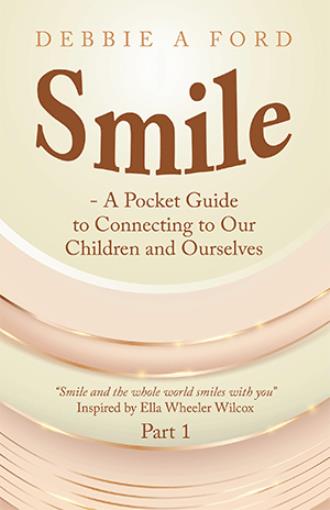
Because home should be the safest place of all. Smile – A Pocket Guide to Connecting to Our Children and Ourselves By Debbie A. Ford This is not your average parenting book. It’s not about perfection. It’s about connection. It’s about what happens when you wake up one day and realise you’ve been parenting from your past—not from your truth. Debbie A. Ford doesn’t hold back. She shares her story with raw honesty—from childhood replays and burnout to diagnosis, repair, and reconnection. This guide is for parents who know something isn’t working… and are ready to make it right. Inside, you’ll find seven relatable chapters filled with real experiences, reflection pages, and smile-creating activities for families. Whether you’re navigating neurodivergence, feeling lost in the noise of modern parenting, or just ready to be the parent you needed growing up—this guide is your reset. It’s not about fixing your kids. It’s about coming home to yourself… So they can come home to you.
About the Author
Deborah Adelle Ford is an advocate for neurodivergent individuals and families. She created the BA Warrior app to offer a 24/7 library of resources for neurodivergent families, providing support even when she’s not there. With a background shaped by her own journey as a parent and her experiences raising children with unique needs, Deborah has developed a deep understanding of the struggles and joys that come with fostering connection in the home. Her mission is simple: make people smile. This brings her joy, fulfillment, and purpose—and it costs nothing. Deborah lives in Clitheroe, Lancashire, with her family, and believes that home is wherever her loved ones are.