

PULPED
a Trashy Tale
by
Book Cover & Preview Text
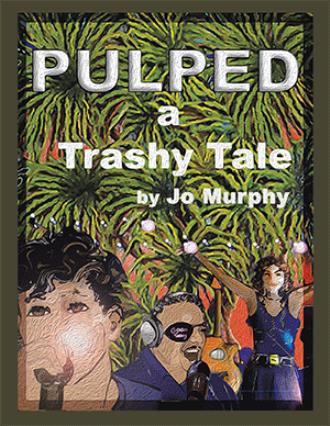
No one turned up to speak for Willy. He sat alone in the courthouse, head propped up by the wall of a tiny air-conditioned demountable. Almost every building in Tricky, a small, hot, dust-red outback town, except for Willy’s, had air-conditioning. His family could have found the dough for aircon, but they spent it on drugs instead. Facing things alone felt normal for Willy, and he would have only been embarrassed if his ‘ants’ had come to see him off. With no one prepared to speak for him, Tricky already knew he would be heading off to juvie. With his knee popping up and down and hands shaking, Tricky folded his arms, trying to look nonchalant. Going to juvie was not all that daunting. Everyone goes there sometimes, and they all come back meaner and tougher than before they left town. So that idea was OK. Not so the idea of going before a judge. Some white stuffy; who would expect that he has something to say? He had nothing to say and didn’t even have the eloquence to be able to say so. When stumped for words, Willy always put his head down and shuffled his feet, and this gesture was always interpreted as an act of defiance. This was how he knew he would be off to the big smoke after a night in the watch house. He had nothing to say. Nothing to say about his friends who had deserted him, leaving him with the stolen bag from the ‘break n ent’. Nothing to say about mates who had dumped their drugs on him as they ran, making him look like a dealer instead of their no-balls tag along. And nothing to say about the stolen car. Even though he didn’t even know who’s it was or where it came from. ‘Are you mute boy?’ asked the judge. Everyone knew the judge didn’t care anymore. He had seen everything there is to see, again and again, and again, Tuesday after Tuesday. Although the whole thing had become insulting and distasteful, he went through the motions. ‘Another day, another dollar.’ ‘Your Honour, I wish to speak please,’ a voice came from behind Willy. Willy will remember this day for the rest of his life because involuntarily, he laughed—a proper guffaw— right out loud. And then, still speechless after gawking around, he dropped his head once more. Like his laugh, his speechlessness came from the staggering surprise of seeing Trashy in the courtroom. Nothing could have startled him more than having someone speak on his behalf. If that was what his teacher had come here to do. Once permitted to speak, Trashy spoke more eloquently than Tricky had ever heard her do before. ‘I have known Thomas for almost three years’, she began. Then, she gave a convincing speech about how Willy was disadvantaged by the system. A system that consistently overlooks how hard it is for students to access a curriculum that isn’t written in their homeland language. A system that humiliates and demoralises them. ‘Gawd!’ thought Willy as the judge yawned. ‘A month in juvenile detention won’t harm Thomas’, he said, ‘and you might find it will even do him good. You can spend some time with him before he goes if you like. The bus doesn’t leave until tomorrow. With this, he passed judgment and retired to have coffee before his next case. In one sense, the conversation between Willy and Trashy was easy-going. Teachers who care decide when they come to Tricky. They can continue talking and listening in their language or try to ‘learn the lingo’. Trashy was one of the ones who tried. ‘I am not sorry,’ said Willy. ‘Not about what we did, but I am sorry for what we did to ya’.’ ‘You didn’t do anything to me,’ said Trashy. ‘Named you Trashy din’I?’ Trashy laughed in her good-natured way. ‘I love the name,’ she replied. ‘Luv Trashy?’ Willy’s astonishment was genuine. ‘Luv Trashy,’ she replied, ‘It makes me feel like you can talk to me, count on me and count me in.’ “Respeck. From now on, I’m gunna say Miss Tasha wid respek,’ said Willy. ‘Well, wid all due respeck,’ said Trashy, ’you will be ‘sulting me’. ‘No get ya,’ said Willy, looking up from under the peak of his cap. ‘Start wid all those airs and graces, and we will come from different worlds,’ she said. ‘I know you don’t like talking about how you feel, but …how do you think you’ll go?’ she asked, reverting to her usual way of speaking. ‘Can’t be wors’n ere can it?’ joked Willy. ‘Nuth’n can’, she laughed in reply. Next thing you know, out comes Crack. ‘What ya ere for?’ laughed Willy. ‘Same as you, but I really did it’, he snorted. ‘Stole wat?’ laughed Willy, back to his proper form. ‘Everything I could find,’ joked Crack and scratched his red-raw, drug-fuddled nose. Trashy rolled her eyes. The ‘bus’ the judge referred to was a prison van. A squashy, unromantic, dark, bleak van at best. Being cooped up with smelly old Crack was on the nose. ‘He’ll be right Trashy’, said Crack. ‘I’ll look after him’. Trashy laughed and laughed, and they all regaled themselves for the next hour with Crack’s exaggerated and self-aggrandised tales. Deep inside, Trashy was cringing with crippling anger. She was angry at his parents, the school, and dare she say it, the system that was sending her favourite student away. ‘Blind Freddy could see Willy had been left holding the bag,’ she thought, kicking an empty disposable cup around. Trashy was a slapdash, easy-going, ragtag teacher. That was for sure. But she had done her homework, and she knew what prison would do to this 12-year-old child. Willy was a skinny, rangy kid who had never had a chance. And now, what the academics referred to as the School to Prison Pipeline was about to swallow him whole.
Select Format

Book Details
About the Book
Willy embarks on an action-packed adventure when he is wrongfully accused and sent to juvenile detention for a term. Confronted by his fallibility, the vulnerable youth finds allies who guide him toward a personal freedom filled with creative opportunities. Willy engages in various creative arts workshops as he explores his options. He is encouraged to focus on inner work and develop his skills while making realistic life choices. Although mercilessly attacked by hostile forces, the young prisoner is inspired to want more and find ways to realise previously unimaginable dreams. To this end, this action-packed adventure inspires young people to Trash the school-to-prison pipeline. This persuasive, informative, and entertaining graphic novel challenges young people to believe that they, too, can find their freedom.
About the Author
Jo Murphy is a creative artist who has always been curious about why and how young people choose. Her time teaching and running creative arts projects in a Juvenile Detention Centre helped her see that all children have their own story, and if they learn how to self-reflect, every young person can take control of their life. For a long time, Jo has used the creative arts to engage young people in exploring their life choices.