

Reclaiming Our Humanity in the Workplace
by
Book Cover & Preview Text
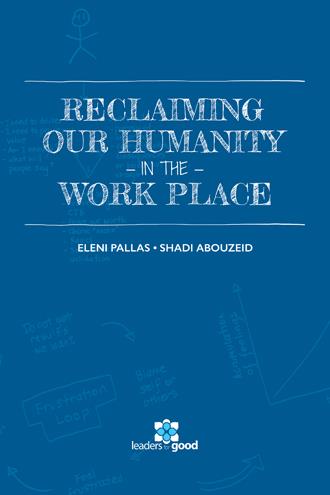
Introduction: The Mindset that Transforms Everything We’re at a turning point in history. The systems and structures we most trust are the very ones breaking beneath us, without clear alternatives for what to do next. In their place, we have the opportunity to imagine and design something profoundly better. This isn’t just another leadership book. Through it we expose the blind spots that keep intelligent, well-meaning leaders and change-makers trapped in counterproductive loops they can’t see. Instead of seeking to fix the outdated models, we’ll reveal the invisible forces that drive unwanted outcomes and replace them with mindsets and strategies that unlock our human potential. What you’ll find here isn’t a hack or a trendy framework. It’s about core-level transformation at both the individual and workplace levels, which is surprisingly simple and powerful. It’s a way of leading and working that equips us to navigate difficulties and seize opportunities in entirely new forms. At its heart is Human-Centric Leading (HCL), a mindset that shifts us from reactivity to intentionality, from judgment to mutual understanding, and from survival to thriving. HCL is supported by five transformative tools that unleash personal and team evolution: Mindsets, Context, Needs, Wisdom, and Emotions. With these tools, you’ll create quick wins as you lay the foundation for lasting change. Perhaps most exciting is the ripple effect. The mindset shifts and tools you’ll learn here extend far beyond your own growth and leadership. They empower teams, reshape work cultures, and influence entire organizations. You’ll see this through real-world case studies of leaders who used HCL principles to solve challenges and foster environments where people and ideas flourish. All of this unfolds against a backdrop of increasing uncertainty and complexity. As we navigate shifting workplace dynamics and global interdependencies, now is the time to embrace a leadership mindset designed for the 21st century: one that respects our humanity, aligns with nature, and ingeniously addresses the challenges of our time. Together, let’s create the future we want to see; one person, one interaction, and one workplace at a time. To support that journey, this book is structured as a practical guide. How to Use This Book Reclaiming Our Humanity in the Workplace is written to meet you where you are and support the transformation of your mindset and workplace culture. Each section is interconnected, providing both context and actionable strategies. The book’s structure is designed to uncover why workplaces often drain rather than inspire us and how to change that once and for all. Here’s what you can expect: • Section I: Understanding the Legacy Industrial Model – To discover the inherited assumptions and outdated beliefs that continue to influence how we live and work. By naming these patterns, you’ll gain the clarity needed to challenge and outgrow them in yourself and within a team at work. • Section II: Cracks in the System – To learn why, at the root level, the prevailing workplace structures are unsustainable and see how visionary leaders are breaking free from business-as-usual to build thriving and financially healthy cultures. • Section III: The HCL Framework – To explore Human-Centric Leading, a mindset and set of tools designed to support a shift in mindset and habit from surviving to thriving at home and work. This book is filled with case studies, examples, and hand-drawn illustrations that reveal both what we’re currently mired in and what Human-Centric Leading looks like in action. Use them to spark ideas and inspire solutions that fit your specific needs and circumstances. The stories and scenarios are based on real client experiences. Many reflect a single engagements, while others blend insight from multiple clients to illustrate recurring leadership dynamics. To respect confidentiality, names, industries, and roles have been modified, yet the core challenges, dilemmas, and transformations remain true to life. In sharing these narratives, we also highlight leaders whose words and actions appear misaligned or contradictory. This isn’t to criticize or diminish them as humans, rather to showcase patterns within the existing workplace model that drive such mismatches. Our goal is to show how smart, caring, and responsible individuals, when operating within outdated and dehumanizing systems, can unintentionally perpetuate dysfunction or harm. By naming these patterns, we invite reflection and offer Human Centric Leading as a more aligned, respectful, and effective way forward. Are you wondering what work could look like if we honored our humanity? Seeing People as Costs Instead of Humans Let’s dive into a case that exposes a gap between leaders’ intentions and actions. The leaders believe they’re doing one thing but unintentionally do the opposite. As you read through the case, notice your reactions: do you agree, resist, or remain curious? No judgment: simply observe yourself because what will soon be revealed may surprise you. Most leaders take pride in treating people with respect. What often happens is that their behavior doesn’t reflect that intention. Consider three executives in the roles of CEO, COO, and CFO, who proudly provide their employees with above-average salaries, elegant offices, generous healthcare, and a cafeteria with a chef. One day, they decided to move their office 20 miles away. The CFO explained he could sell the existing building at a premium and buy an equally beautiful one for much less per square foot. It seemed logical, even a “no-brainer,” because it made sense financially. But what about its effects on employees? That’s where the logic broke down. In fact, the decision didn’t even align with the leaders’ intentions to care for their people in the best ways possible. At a meeting, the leaders reaffirmed their belief that employees were the company’s “most important asset.” Let’s pause here. Describing people as “assets” frames them as costs on a balance sheet. When this was pointed out, the CFO chuckled, noting it’s a metaphor. Having said that, he acknowledged that employees’ salaries appear as liabilities on financial statements. Would the move affect the commutes, productivity, and job satisfaction? The new office location would add an extra 35 minutes to most employees’ travel time. Asked to calculate the impact, the CFO presented surprising results: the additional time on the road, when valued against employees’ total compensation, was staggering. The CFO dismissed it, saying it wasn’t his or the company’s responsibility. While true, the extended commute would demand sacrifices in time and well-being, affecting employees’ families, fitness, and morale. If employees were truly the “most important asset,” this decision would hurt their experience of working at that firm. Longer commutes would likely lead to frustration and resentment, reducing productivity and retention, which would be detrimental to both the organizational culture and the bottom line. On the other hand, considering employees’ needs in this decision would demonstrate the leaders’ commitment to putting people first. While it won’t minimize costs in that specific instance, it would foster engagement, productivity, and retention. This approach aligns intentions with actions, and as a byproduct, saves money in the long run by showing employees that they really matter. The leaders, looking at each other, recognized what it truly meant to put people at the center of decisions. That realization became the first step in their journey to becoming human-centric leaders. But this was a such a simple and straightforward example.
Select Format

Book Details
About the Book
What if everything you’ve been taught about leadership is the very thing holding you and your team back?
For decades, visionary leaders and teams have poured energy into building new skills and launching change initiatives, yet the same problems persist. Why? When stress and overwhelm take over, even our best skills go offline. Until we address the underlying context and mindset, no amount of training can create lasting change.
Reclaiming Our Humanity in the Workplace reveals how inherited mindsets and workplace structures keep us trapped in survival mode, blocking our ability to access what we already know, even when we’re striving for more.
Human-Centric Leading (HCL) offers a bold alternative. Grounded in a whole-human mindset and five transformative tools, Mindsets, Context, Needs, Wisdom, and Emotions, HCL equips leaders to respond deliberately instead of react habitually and design workplaces where people thrive.
Through real stories and perspective-shifting insights, you’ll discover:
- Why popular fixes such as Lean, Six Sigma, new operating models, and emotional intelligence training miss the mark.
- How outdated assumptions drive many of the actions and outcomes we say we don’t want.
- How to break free from default thinking without sacrificing excellence.
- How to cultivate cultures that build trust, creativity, and sustainable performance aligned with Mother Nature.
Now is the time to reclaim your power, work with others more effectively, and create a future that meets the challenges of our times with ingenuity and in harmony with nature.
The future of work won’t be shaped by the systems we inherited, but by the mindsets we choose to lead with and the contexts we design – starting now.
About the Author
Eleni Pallas is an executive coach and creator of Human-Centric Leading, a mindset and toolset that leaders use to create high-trust, high-impact cultures where people think bravely, work wisely, and thrive together. Shadi Abouzeid, PhD is a faculty member at Georgetown University. He specializes in bridging technology with human-centered approaches to shape cultures of innovation. His work focuses on strategic foresight, organizational design, and global scenario planning.