

Pour The Gold
What Happens When You Stop Believing You're Broken
by
Book Cover & Preview Text
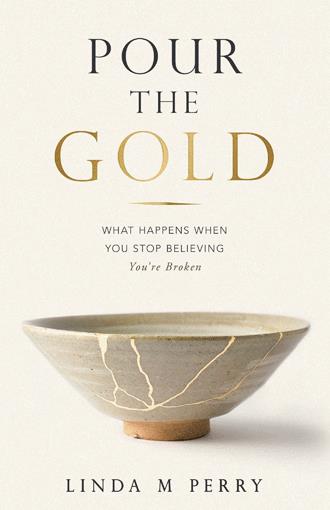
Introduction Let me say this right from the start… You are not broken. No matter how screwed up you might feel at this moment, no matter how hard things have been up until this point, no matter what you've experienced… you, my friend, are not broken. At least, not in a way that should keep you from embracing the fullness of life and the possibility it holds for you. I know this to be true because, for years, I felt just like you—broken, unfixable, and destined to never get what I want. But I'm here to share that I was wrong. It's simply not the case. People come to me asking to be "fixed." They tell me they're irretrievably broken and need someone to set them right. They believe they are forever the culmination of their mistakes, bad patterns, poor decisions, and awful things that happened to them. But here's a secret I'm going to share with you that will change your life forever: You do not need fixing. There is nothing wrong with you. Your cracks, your scars, your story—they don't diminish you. They are the very things that make you more beautiful, more resilient, and more whole. Years ago, I discovered something that completely shifted my perspective on what it means to be broken. There is a Japanese tradition called Kintsugi, where a broken bowl or vase is glued back together and the seams are painted with gold. The legend tells of a shogun warrior who broke his favorite tea bowl and sent it away for repairs. When it came back held together by unsightly metal staples, the shogun was disappointed. He asked a local craftsman for a more elegant solution. Using a new technique, the craftsman mended every crack with a lacquer resin mixed with gold. The result was a graceful bowl with gold streaks running through it—a piece that told a story and was more beautiful and valuable than the original. This is exactly what's possible for your life. The point isn't that something broken can be made acceptable again. The point is that your breaks, your struggles, your so-called imperfections make you more magnificent, not less. Unfortunately, most of us can't see the gold that weaves through our life stories. We see only darkness, flaws, mistakes, and broken pieces. We fear our cracks will be exposed and we will lose everything—or worse, never really get the things we want. But what if I told you that by the time you finish this book, you won't want to be any other way? I too believed I was a mess of broken pieces, and unless I worked relentlessly to hide that fact, I would be rejected, abandoned, alone, and a complete failure. By the time I reached 34 years of age, I had built a life that looked more like it was stapled together rather than threaded with gold. And much like the shogun's bowl, my staples finally gave way. I was drowning in anxiety, panic, and the overwhelming feeling that I couldn't breathe in my own life. So I tore down everything I had built—my marriage, my family structure, my carefully constructed image. But here's what I didn't realize then: blowing up my life wasn't destruction. It was actually the beginning of my healing journey. And I'm guessing, if you're reading this, you are currently being held together by something that isn't quite as beautiful as it can be. You have likely said things to yourself you would never say to another person. You've been cruel to yourself, betrayed yourself, and denied yourself a good life because you believe you're broken. This book is for you. Chapter One: You Were Born Whole "The purpose of our journey is to restore ourselves to wholeness." — Debbie Ford I am standing in the middle of the self-help aisle in Barnes & Noble, staring at books about divorce, hoping something can help. Then I see it right in front of me: Spiritual Divorce: Divorce as a Catalyst for an Extraordinary Life, by Debbie Ford. Little did I know that picking up that book in 2005 would change my life entirely. As I stood in the bookstore, I flipped open to this passage: "Pain is a wake-up call showing you that there are oceans you have not yet explored. Step beyond the world you know." In my world, pain was something you simply eliminated, solved, or fixed. No one had talked to me about the idea that pain could be a catalyst for something better. It was through Debbie's work that I first recognized that perhaps the way I was looking at myself was all wrong. Perhaps I wasn't born defective. None of us are. No matter what you think about yourself now, you didn't come into the world broken. There is no gene or proclivity for brokenness. You—like every single one of us—were born whole and complete. I can remember standing in the hallway of our apartment at age three, screaming, with tears running down my face. My parents had just put Tabasco sauce on my hands to stop me from biting my nails. My mouth is burning, and I'm wailing as the innocent sun shines through the window above me. But it isn't the pain or the Tabasco that leads me to believe I'm broken. It's that nobody comes to console me. In my own terror and confusion, I'm standing alone. So, instead of thinking my parents must be wrong, I decided I must not be worth attention. That is how wholeness becomes fractured. It happens in a flash. But here's the truth: you are still whole. And the proof is that you are here, reading this book.
Select Format

Book Details
About the Book
You’ve never said it out loud, but the thought is there: I am broken. It’s the belief beneath the overachieving, the people-pleasing, and the quiet settling for a life that looks fine but doesn’t feel true. Pour the Gold uses the Japanese art of kintsugi— repairing broken pottery with gold—as a framework for understanding the fractures you’ve been carrying. Through honest storytelling and practical tools, Linda Perry guides you from the pain of feeling broken to the practice of building a life that is more beautiful because of your breaks, not in spite of them. This isn’t a book about fixing yourself. It’s about creating a life you no longer need to escape from.
About the Author
Linda Perry knows what it feels like to believe you are fundamentally broken — and she knows what it takes to stop living from that belief. A shadow coach for over thirteen years, trained at the esteemed Ford Institute founded by Debbie Ford, Linda has spent her career helping people uncover the hidden beliefs that keep them playing small, staying silent, and settling for lives that feel safe but not true. She served as Lead Business Instructor at the Levin Life Coach Academy for six years, training the next generation of coaches, and spent seventeen years before that as a federal criminal defense attorney, where she first learned to see the patterns people can’t see in themselves. But her deepest understanding of this work didn’t come from training or a courtroom. It came from living it — from her own journey through the fractures, the silence, and the slow, sometimes terrifying process of learning to pour gold into the broken places. Linda wrote Pour the Gold because she believes the pain of feeling broken is one of the most common — and least spoken — experiences of being human. It’s the thing said in a whisper, if it’s said at all. Her passion is giving people their voice back. She lives in Lisbon, Portugal, where she writes the Substack newsletter This Human Journey and where she wrote this book — fueled by good coffee and early morning light.